
Free Guide
The Wise + Wild
Kitchen Companion
Your printable cheat sheet for confident, adventurous eaters.
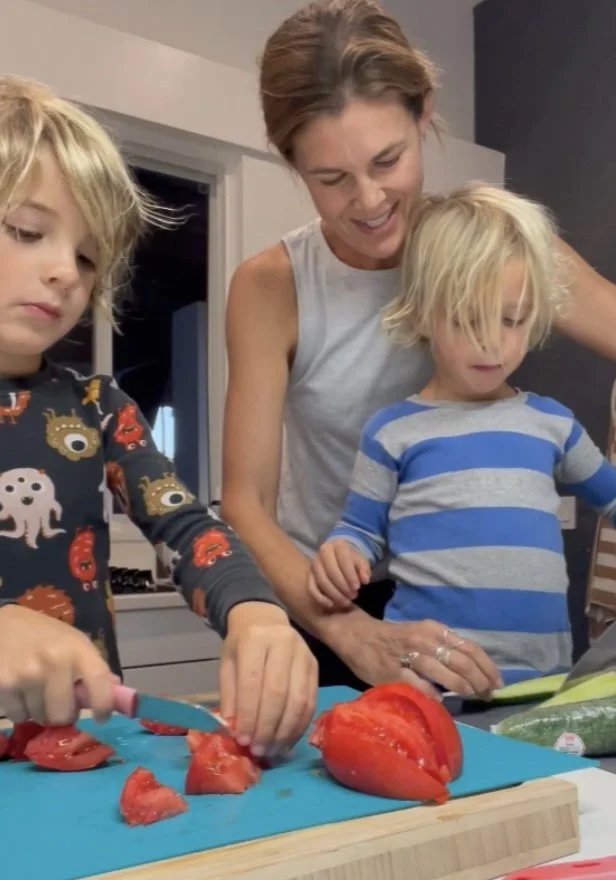
This is everything I actually do in my kitchen with my boys. Real tools, real jobs, real food. No special equipment, no tricks. Just what works when you let kids show up as capable people and give them something worth doing.
Get the Printable Guide
Send it to my inbox
Free. One page. Tape it inside your pantry door.
The Full Guide
10 Tips for the Kitchen
Get a Mother's Helper Learning Tower
This is your non-negotiable. A Mother's Helper learning tower gets your toddler to counter height so they're actually in the experience with you, right beside you. I bought mine on Etsy but you can find them on Amazon now too. Side-by-side prep turns a chore into a shared ritual. My boys have stood by my side cooking since they were old enough to stand. The memories and minutes shared are priceless. Everything else on this list starts here.
Start With a Real Knife — Not a Plastic One
Children like to take risks. They want to feel actually helpful. Start with a butter knife or a dull kitchen knife (I did not buy anything special). Coach them: where to hold the handle, how to curl their fingertips under, how to press down steadily. Start with soft things like bananas, pears, and mushrooms. Then move up. The real knife teaches focus in a way a plastic one never will.
Describe the Food Before Asking Them to Try It
Think about escargot. If a waiter just said "try this," you'd say no. But if they described it first, you'd be curious. Do that for your kids. "This is a red pepper. It's sweet and crunchy. Want to try it?" Sight, smell, and touch already count as exposure.
Give Them the Salad Spinner
Handing a two-year-old a salad spinner is pure magic. They will wash the greens, taste a leaf, spin it dry, spin it again, taste another leaf, for ten full minutes. You can use it for herbs, berries, fresh vegetables. It's a real job and they know it. Children want to feel actually helpful. Give them this and they will bring their whole selves to dinner.
Bring Out the Fun Tools
A melon baller scoops perfect little balls of cantaloupe or watermelon. A microplane grates Parmesan right onto pasta. A small whisk lets them make the dressing themselves. These tools make the prep feel like play, which means they are right there next to you the whole time, tasting as they go.
Teach the Polite Spit
Tell them: if you don't like it, you can politely spit it into a napkin. Most kids actually get in trouble for spitting food out. Over time that shame makes them afraid to try anything new, because if they don't like it, they are stuck. Give them this exit and they will be willing to try almost anything. Celebrate that they tried.
Use the Kitchen to Teach Math, Science, and Reading
Measuring ingredients is math. Watching what happens when yeast meets warm water is science. Following a recipe is reading. Writing one down together is writing. The kitchen is the best classroom you already own.
Let Them Do the Risky Stuff (Supervised)
Let them press the food processor button and handle the blade with clear, hands-on guidance. Stir the pot over heat. Peel the carrot. Flip the pancakes. Children like to take risks and they want to feel like what they're doing actually matters. Use words like, "I knew you could handle that" and watch their confidence skyrocket.
Make Fresh Sauces Together
Fresh pesto, chimichurri, and salsa are three of our favorites. Let them smell the basil, really smell it, crush it between their hands. Taste a toasted pine nut. Dip a finger in olive oil. Taste the Parmesan. This is full sensory exposure in the most natural, no-pressure way. My son and I perfected our chimichurri recipe together and now our whole family loves it. That is the kind of thing that lasts.
Make Healthy Smoothies Together
Make healthy smoothies together. Try some frozen mango and pineapple, 1/4 avocado, a big handful of greens, and blend with OJ or full fat milk of choice. Let them taste. Kids who make green smoothies almost always drink them.
Cheat Sheet
Kitchen Jobs by Age
Toddlers
- —Washing greens
- —Spinning the salad spinner
- —Tearing herb leaves
- —Mashing avocado
- —Dumping pre-measured spices
Little Helpers
- —Spreading butter
- —Cutting bananas or mushrooms with a butter knife
- —Using a melon baller
- —Kneading simple dough
- —Mixing salad dressings
Young Chefs
- —Measuring dry and wet ingredients
- —Grating cheese (supervised)
- —Peeling carrots
- —Stirring pots over low heat
- —Building their own recipe book
Want the full story behind these tips — including the "escargot shift" and what our international move broke wide open for us?
Read the Full Post →