
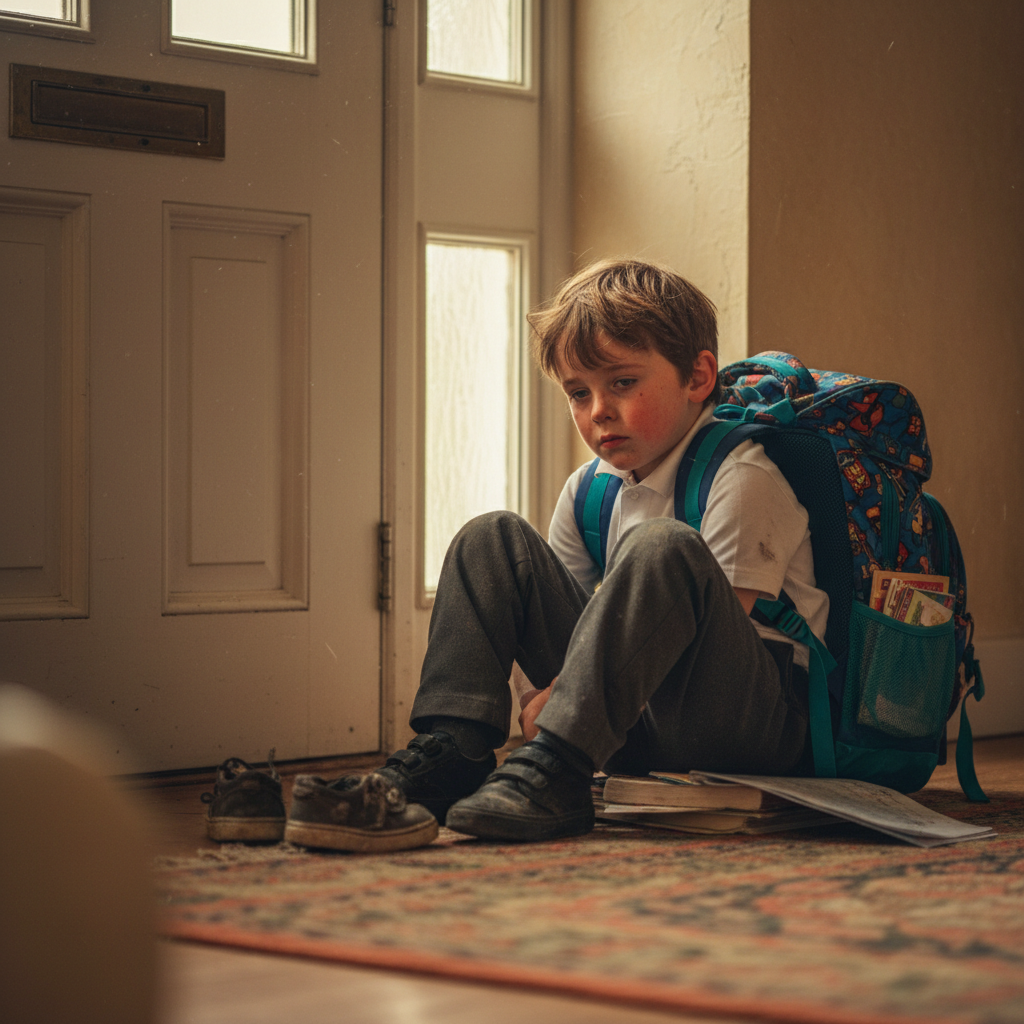
The car door slammed, and within seconds, my six-year-old was snapping at me. "Why didn't you bring the right snack?" he barked, his face scrunched in frustration. I had been so excited to see him, snack and smile ready, but now? He was rolling his eyes, melting into tears, and I was gripping the steering wheel, trying not to cry myself. What am I doing wrong? I thought. Why is he so angry at me the second he sees me? Why does the tiniest thing absolutely set him off?
If your child is falling apart after school, it's just because you're their safe place- they're the person they CAN fall apart with after following rules, dealing with social stress, and holding it together all day.
Why School Is Like "Going Off to War"
One thing that's helped me navigate this season is Maggie Dent's book Mothering Our Boys. In it, she talks about how hard school is on boys especially—and how important it is to be prepared for the after-school crash.
She compares it to a little boy going off to war. All day long he's trying to be good, to sit still, to follow the rules, to navigate the playground politics. It's stressful. Draining. And by pickup time, he's completely overloaded with cortisol, the stress hormone.
She also shares this...
"Boys are often more sensitive than we give them credit for. They feel deeply, but they don't always have the words or tools to express it." — Maggie Dent
In a nutshell: When kids are stressed, their bodies release cortisol, the stress hormone. By the time they get in the car after school, their cortisol levels are sky-high, and they're emotionally drained. That's why a balanced snack or a moment of humor can make such a big difference. It helps their bodies and minds release cortisol and reset.
Practical Strategies That Work
Once I started to understand what was really going on I realized I needed to approach school pickups differently. Here's what's been working for us:
1. Snack First
Not ONLY a sugary one (though a little sweetness doesn't hurt). I pack something with fat, protein, and a bit of carbs. Think apple slices with peanut butter and cheese, and a chocolate chip cookie too. Balanced snacks help release the stress hormone cortisol. If I'm really scrambling, a drink with electrolytes like LMNT or Redmond Re-Lyte actually helps shift the mood until I can get some food in him. But I try to keep a few boxes of granola bars in the glove compartment at all times in case I'm running late. Not ideal, but better than nothing.
2. If I Can't Bring Food, I Bring Fun
Humor also helps move cortisol through the body. If I'm running late and don't have a snack, I look up a riddle or joke when I pull into the carpool line. Other days I pretend to tackle him when I get out of the car, or scoop him up and spin him around, then pretend to bodyslam him. I'm not above a whoopie cushion, or some silly glasses with a fake moustache. Yes, I actually do these things. I am above no foolishness to reconnect with him.
3. Resist the Urge to Ask Questions
It's so tempting to say, "How was your day?" but the truth is, he usually has no idea. He's still processing. I've learned the stories come out later once we're home, once he's played, and once he's more relaxed.
4. Create a Rhythm at Dinner: Rose, Thorn, Bud
We do "Rose, Thorn, Bud." Each of us shares:
- A rose (something good)
- A thorn (something hard/negative)
- A bud (something new we learned or tried)
All four of us enjoy this game.
5. Best Information Recon Happen at Bedtime
This is when their defenses drop and stories about their day seem to float to the surface on their own. At bedtime I ask some questions if they haven't told me anything yet. Boys, especially, often need more time to unwind before they can share what's really going on.
I know, I know, I know... you want to know ALL the things, right away. I get it! I'm learning that waiting is actually one of the most loving things I can do, and I get more information later.
A Developmental Shift Around Age 6-7
A little detail about six and seven year olds: Children around this age—right around when those baby teeth start falling out—are entering a whole new developmental stage. Their awareness deepens. They start to see the world more clearly, in all its joy and heartbreak. It's a big shift.
I recently learned from Donna Scott, a holistic psychologist, that during this time children are also suffering from the realization that they are separate individuals from their parents. It causes them stress, confusion, and a sadness that they don't really understand. This may come out as grumpiness, irritability, or reactivity.
This information really helped me understand why my sweet and sensitive six year old has been more reactive and angry lately. He is going through a major transformation.
I'm not sharing this because I've figured it all out. I haven't, but this information has helped me tremendously and I hope it serves you and your kids.
Want more support navigating your child's big feelings? Stay connected to receive weekly reflections on parenting, connection, and emotional development.