
Episode 2 · May 30, 2024 · ~30 min
Kitchen Confidence: How Cooking with Kids Transformed Picky Eating, the Witching Hour, and Our Family Connection
This episode dives into one of the most transformational decisions I made as a parent — born out of pure desperation, but wow, did it change everything. If you've ever struggled with picky eating, the chaos of the witching hour, or just finding meaningful ways to connect with your kids, this one's for you. I'm sharing how cooking with my kids became the ultimate game-changer — not just for their eating habits, but for building confidence, connection, and even sneaking in some life skills like math and science. This isn't just about food — it's about creating moments that matter.
Free Printable Guide
The Wise + Wild Kitchen Companion
Get the printable cheat sheet — 10 tips for confident, adventurous eaters. Tape it inside your pantry door.
Get the Free GuideStay Connected
Get new episodes + free resources
No noise. Just the good stuff, when it's ready.
Full Summary
This episode dives into one of the most transformational decisions I made as a parent — born out of pure desperation, but wow, did it change everything. If you've ever struggled with picky eating, the chaos of the witching hour, or just finding meaningful ways to connect with your kids, this one's for you. Today, I'm sharing how cooking with my kids became the ultimate game-changer — not just for their eating habits, but for building confidence, connection, and even sneaking in some life skills like math and science. Trust me, this isn't just about food — it's about creating moments that matter.
Hello, hello, it's Emily from Wise and Wild and today I wanted to talk to you guys about one of the most transformational decisions I made in my house that was born totally out of a place of desperation, okay? And it is such an all-encompassing activity to involve your kids in that I want to share it with the world. I want to share it with you.
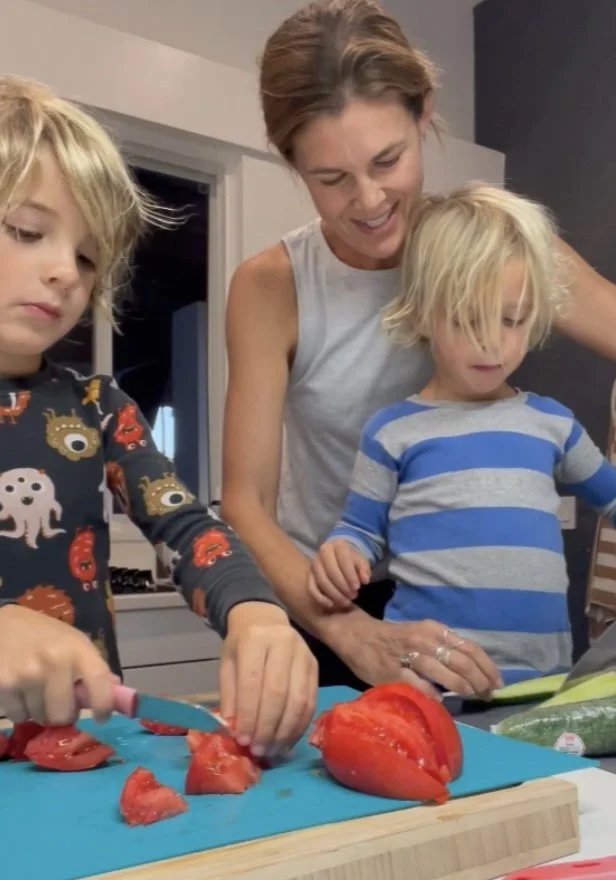
And for me, this came about when I was staying first at home with my approximately, well, my oldest son when he was like one and two, I started involving him in this activity. And later on, it became an even more powerful and important tool for me to get through the witching hour and get through the day. And I will just go ahead and share with you that I'm talking about cooking with your kids.
And I was fortunate enough to work from home. I still do work from home. Now my boys are six and eight and these tools were really, really super powerful for me, especially when they were toddlers and a little bit younger. Now they still do cook with me. And I'm often reminded of how important this is when it comes to picky eating. We recently moved internationally and my older son who had not previously been a picky eater, started rejecting a lot of foods and a lot of his comfortable familiar foods were no longer available to him. And we really had to find new foods and figure out ways to keep him full and satisfied because you know how difficult hanger can be and how stressful it can be when you're dealing with a picky eater. And I had this huge light bulb moment because I was like, realizing that the main reason he was never a picky eater before that is because he was exposed to so many different types of food in a non-pressure way by cooking in the kitchen with me.
And there are so many different reasons why this is important, but the first one is because I want you to imagine that you're in a French restaurant or some sort of international restaurant and they say, do you want to try our house dish? It's escargot. And what is escargot? It's snails. And you're like, no, thank you. But what if the waiter had said, it's really soft, small snails that are cooked in garlic butter. The table will receive six of them. And often you scoop it up with a small fork and put it on a piece of baguette with some butter. It's got like a very soft, salty, garlicky texture. And if you don't like that, you can always enjoy the garlic butter with the baguette. Right? So much of the mystery has been taken out of the situation for you, so you're more likely to be inclined to try it.
So often we put some food in front of our kids' faces and we just say, try it, try it. And they have no idea what to expect. Is this going to be sour? Is this going to be sweet? Is it going to be salty? Is it going to be chewy? Is it going to be grisly? But taking away the mystery out of different foods in such a no pressure organic way will automatically make your child so much more likely to try foods.
And the first way that I did this through cooking with them was, let's say I was making some sort of stir fry for dinner. I would bring up their little mother's helper ladder next to me. If you don't have a mother's helper ladder and you have a small child in your home, I cannot recommend it enough because it allows them to stand next to you in the kitchen while you work on literally anything. And it is so easy and so fun. I bought mine off of Etsy, but now I have seen that they become so much more popular and you can easily find them on Amazon.
And so let's say I was cooking a stir fry. I might slice up a couple of peppers, a red pepper, a green pepper, some sweet onion, and whatever it is you're throwing in there, right? Some broccoli, some cauliflower, and put a little bit of each of it on their cutting board next to you.
And people have asked me many times what type of knife I recommend for children. And truthfully, my favorite types of knives that I have given them are my duller kitchen knives. I've also started them out with like butter knives or a simple serrated steak knife. Like I did not initially buy anything new for my kids, which I like because it forced me to be more attentive to the way they were cutting right out of the gate, and teach them how to actually hold a knife and cut appropriately.
So let's say you're cooking all of those things and you'll say, this is the red pepper. It's crunchy and sweet and it's got the skin on the outside, but you can kind of snap it in half. And would you like to taste it? This is a green pepper. It's not gonna be as sweet as the red pepper. Here's some sweet onion, crunchy, and you invite them to taste anything that they want in a no pressure way. So the next time you go to a restaurant and you order chicken fajitas for the family at the Mexican restaurant, they're not gonna wonder what a red pepper is, what a green pepper is, what a cooked onion looks like. They will have already seen it. Whether or not they decided to try it, it almost doesn't matter because sight, smell, texture is a lot of it — just removing the mystery for them and empowering them and making food exposure a positive thing.
So that's one of the main benefits of cooking with your child — you can expose them to so many different things. And I'll give you guys some examples of things that we like to make together. Fresh pesto sauce. Ooh, do you want to smell this basil? Crush it between your hands. Smell the garlic. Dip your finger in the olive oil. Taste a little bit of Parmesan cheese. Do you want to taste this nice toasted pine nut? Inviting them to taste different things that are not just baking chocolate chip cookies, which I have no problem with. We try to bake those on the regular.
Making things like sauces with them — chimichurri is another favorite of mine. I studied abroad in Argentina and making chimichurri and perfecting that recipe with my son has been one of our most favorite things because now my entire family loves it.
Another thing that I love to do with my boys is the salad spinner. Handing a two-year-old a salad spinner is pure magic. They will wash the greens, taste a leaf, spin it dry, spin it again, taste another leaf, for ten full minutes. You can use it for herbs, berries, fresh vegetables. It's a real job and they know it.
I also love a melon baller. A melon baller scoops perfect little balls of cantaloupe or watermelon. A microplane grates Parmesan right onto pasta. A small whisk lets them make the dressing themselves. These tools make the prep feel like play, which means they are right there next to you the whole time, tasting as they go.
One of the most important things I ever taught my boys is the polite spit. Tell them: if you don't like it, you can politely spit it into a napkin. Most kids actually get in trouble for spitting food out. Over time that shame makes them afraid to try anything new, because if they don't like it, they are stuck. Give them this exit and they will be willing to try almost anything. Celebrate that they tried.
And let's talk about the risky stuff, because children like to take risks. They want to feel actually helpful. Let them press the food processor button. Let them stir the pot over heat. Let them peel the carrot. Let them flip the pancakes. Use words like, "I knew you could handle that" and watch their confidence skyrocket.
The kitchen is also the best classroom you already own. Measuring ingredients is math. Watching what happens when yeast meets warm water is science. Following a recipe is reading. Writing one down together is writing.
Here is what cooking with your kids does for the witching hour specifically. Before I started this, the late afternoon was the most stressful part of my day. My boys were tired, I was tired, dinner felt like a mountain to climb, and nobody was happy. When I started bringing them into the kitchen with me, all of that changed. The witching hour became something we actually looked forward to. We put on music. We made a mess. We tasted things. We talked. They were occupied in the best possible way and I was getting dinner made.
I am not saying every day is perfect. Some days I still just need them to watch a show so I can cook in peace and that is completely fine. But on the days we do it together, the connection I feel with them is something I cannot get anywhere else.
My biggest tip of all: lower your expectations and raise your standards for what counts as success. Success is not a perfect meal. Success is your child washing the lettuce, tasting a pine nut, and spinning the salad spinner for ten minutes while you slice a pepper and talk about their day. That is everything. That is the whole point.