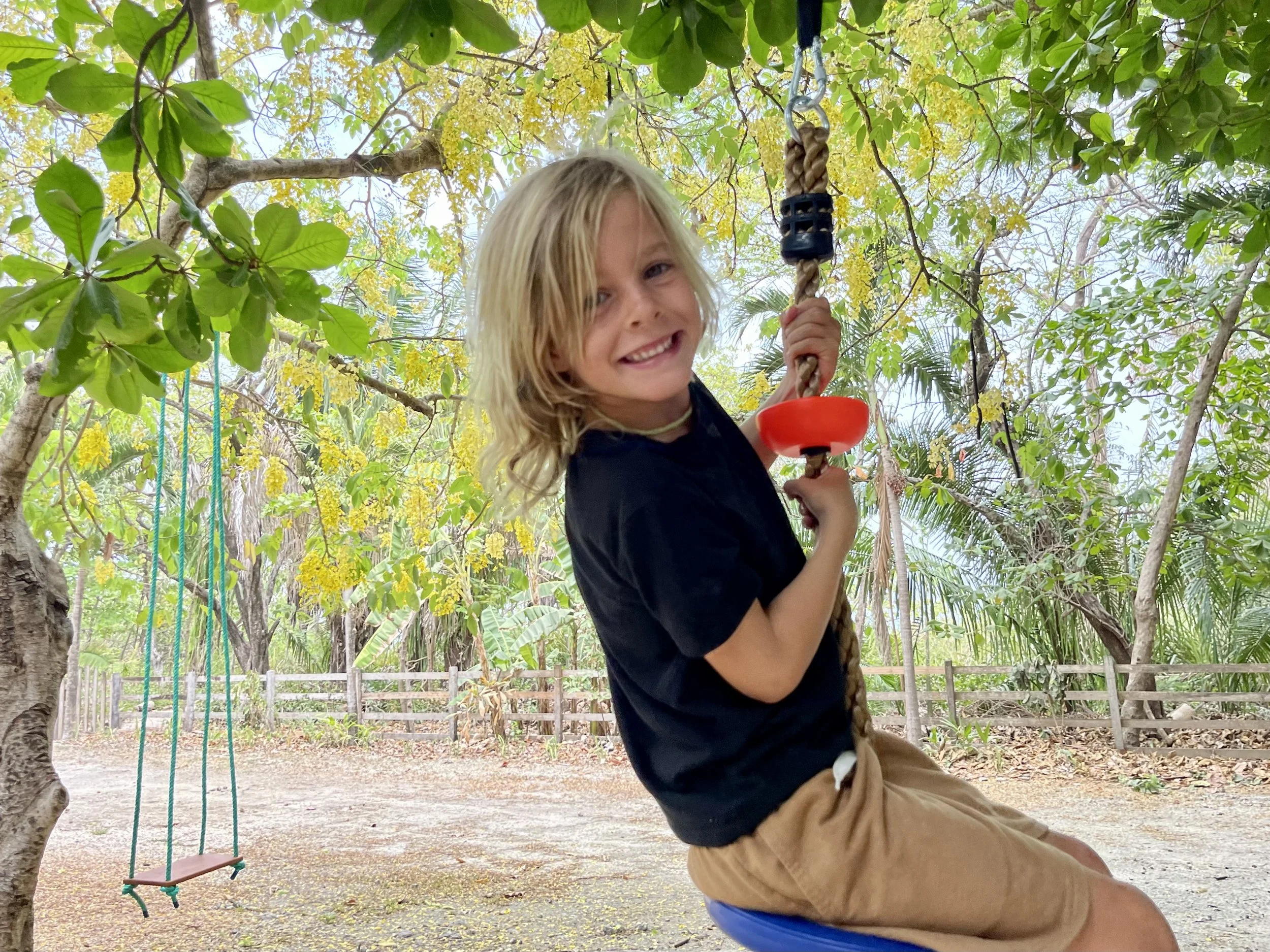
In this personal episode, I dive into the emotional complexities of raising boys and navigating their anger. I share my own journey of moving from reactive parenting—rooted in fear, perfectionism, and frustration—to a more compassionate and empowering approach.
---
Hey guys, it's Emily. I wanted to go a little deeper into this conversation of boys and anger today because I did write a blog post about when boy anger feels too much and talk a lot about like the feelings that surface inside of me when my boys are freaking out. But what I didn't talk about is how I finally came to shift to where I can have a better response to them because there were weeks when I was reacting to them from a place of, are you kidding me right now? And how dare you speak to me like that? And other phrases that were kind of like I would have my regular go-tos.
And so I don't ever want to present this conversation like I do things perfectly. I often have to go through a very messy period that evokes enough sadness inside of me about the rhythm and the dynamics in our household that I'm willing to change.
For me, like I've mentioned, that occurred as my boys got older. And I realized that my expectations, as far as how I thought they should respond or handle their emotions, like it had me just feeling angry with them all the time that they were getting angry with me. I thought that they should be, I thought things would be easier.
And I think what I'm realizing is that boys will often just go through a difficult transition period when maybe they're experiencing more anger than usual. I know that my six-year-old is experiencing that right now, even though at this point we're kind of settled and the international move is behind us. Five, six, seven-ish is a developmental stage when children start to see themselves as unique individuals and that realization that they are separate from their parents and from others can often lead to feelings of isolation and confusion and sadness that can surface as anger. You know, my eight-year-old a while back had his own period of time when he was feeling more explosive and now my six-year-old is kind of going through it. And there were plenty of days that I did not respond to them in the ways that I hoped.
---
There's two aspects of this that I really wanna talk about with boys and their anger. Boys often experience feelings of sadness and feelings of frustration—often the overwhelm of school, boys trying to follow the rules, boys trying to understand social dynamics—can come out as explosive anger.
I will never forget a few years ago there was like this viral meme on Instagram of a little boy who had been sent to time out in the bathroom and he was kind of holding himself and rocking himself and singing the song "all by myself." And everyone was like, oh, cry me a river. Oh, how like so dramatic. Oh, give me a break. And I received it totally differently. This is a young boy who is literally telling us how he feels when he is sent to time out to try and reconcile feelings all by himself that he himself does not even understand.
They may not—they do not understand why they hit. They do not understand why they punch or talk back or speak with a nasty attitude when they are feeling what they're actually feeling is sad. They themselves do not understand this. And then they are punished and sent away from us to try to figure it out all by themselves. And then we wonder why our teenage boys lock their rooms and don't want to talk to us about what's going on. Or why adult men have such a hard time talking through an emotional situation or being emotionally present during a really stressful or sad time. And it's just so astoundingly obvious to me that what they need during those moments is not punishment. And yet I have also done the yelling and sent them away from me because just because we begin to understand this doesn't mean that we are capable of calming our nervous systems and responding in a way that is helpful to them.
---
So there's a couple of things I really needed to look at to understand why I became so triggered in these moments. And the first one is I had this belief that like, if my kid talks back to me and I kind of let it roll off my back, that I'm just allowing them to treat me like crap. I'm just allowing them, I'm creating a dynamic in the household where they can treat their mom like crap and talk down to their mom. And that is not true.
They are experimenting with different tones in different ways of asserting themselves. And the truth is I actually want them to assert themselves. You know, I do still hear people saying, you know, when adult tells you something, it's yes ma'am or no ma'am. Okay, well, what about if that adult tells you, pull down your pants and show me your penis, right? Like, don't we actually want them to be comfortable talking to us or talking to an adult or asserting themselves that they're in a situation that doesn't feel right to them on the inside?
So I needed to begin to trust—and this came through a lot of work with talking to my friend Donna, who will be featured on the Dear Donna podcast. This came through a lot of work in understanding with her—that we can allow those moments of anger to surface and trust that they are kind of learning and testing different ways to express themselves and trust that through coaching later, we will be able to refine that more, that it doesn't have to happen in the heated moment. And that doesn't make us a doormat. It doesn't mean we're creating a space where they can just treat us like garbage. It just means that we're going to address that later.
---
So that was the first realization and trust that I need to have. And I realized that underneath this belief I had a lot of fear. I had fear that if I was too soft, if I was too compassionate, if I allowed their anger to surface without shutting it down right away, that it would somehow give them permission to treat people disrespectfully. And what I've learned is that's the opposite of what happens. When we get to the root of what they're actually feeling, when we help them understand it, when we help them name it, when we validate it, and then we address the behavior—that's when we actually teach them something.
Punishment and shame teach them to hide. They teach them to suppress these feelings. And I've watched this happen in my own household where my boys would apologize the moment I would respond with anger, and I thought that was good parenting. But what I was really teaching them is that my feelings matter more than their feelings. And I was teaching them that it's not safe to be angry with me.
---
Here's what I've started doing instead. When my boy is angry, I validate it first. I say things like, "You sound really angry right now," or "I can see that you're frustrated." And that simple acknowledgment—just that validation—often diffuses the entire situation. It makes them feel seen. It makes them feel like their feeling is not wrong.
And then, after the moment has passed, after everyone's calm, I come back and we talk about what happened. I help them understand the impact of their words or their actions without making them feel like they are bad. I say things like, "When you spoke to me like that, I felt hurt," and I also say, "And I also know that you're learning how to handle big feelings, and that's okay. You're doing okay."
---
The parent's role in this is huge. My own triggers—including perfectionism and fear of losing control—have fueled my reactive responses and created a very nervous reaction in me. By addressing my own emotional patterns, I am able to create a calmer, more supportive environment for my boys. And that's not easy work. That's the hardest work I've ever done. But it's the work that matters.
---
Trust the process of emotional growth. Boys are experimenting with tones, boundaries, and ways of asserting themselves. This is normal and necessary for their development. And it's okay—and more productive—to address behavior later, rather than in the heat of the moment.
---
Compassion starts with you. Self-awareness and self-compassion are crucially important. By understanding why you're triggered by your child's anger, you can respond with more patience and empathy, breaking the cycle of escalating emotions.